
- Completeness is still the leading reason IRCC returns applications. Each applicant needs their own forms, checklist, photos and fee receipt, and officers generally will not call to ask for a missing item.
- A returned package may flag only the first problem IRCC found, so review everything before resubmitting. Signatures expire after 90 days and photos after six months, and the package may come back eight to ten weeks after mailing.
- Provide a government-issued birth certificate that lists the parents' names. A short-form certificate or birth registration may not show parentage, and a marriage licence or registration is not the marriage certificate itself.
- For ancestors born before roughly 1900 to 1910, a baptism record is often the best evidence. If a record cannot be found, explain where you searched and what other records point to Canada.
- Include inconsistent records, such as a census listing the wrong country of birth, and explain them. Walk the officer through the family line one generation at a time, ideally in an explanatory letter.
Over the last five to six months, citizenship by descent has become a major focus of our practice at Marin Immigration Law.
In that time, our office has represented more than 200 individuals with potential citizenship by descent claims. These files have kept our team of five lawyers, our staff genealogists, and our research assistants working through family histories, civil records, church records, census records, naturalization documents, and the recurring problem of missing documents.
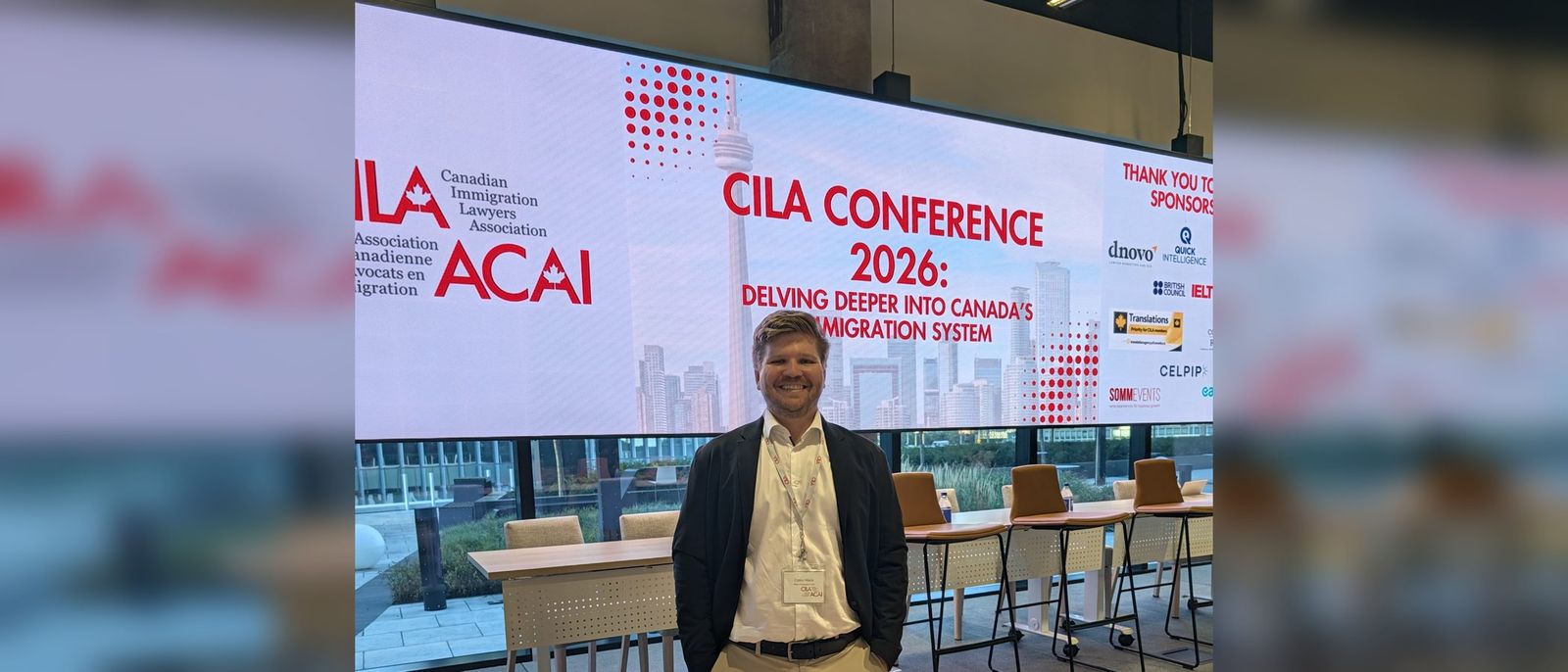
Alongside that work, our lawyers have attended a number of citizenship-focused training sessions through the Canadian Bar Association and the Canadian Immigration Lawyers Association. These sessions have included presentations from senior IRCC citizenship officials, directors and assistant directors from the citizenship section, senior counsel, professional genealogists, and authors who write extensively in this area. Several of them have run more than one session.
The purpose of this blog is to share some of the practical lessons we have learned, both from the files themselves and from those training sessions, since the repeal of the first-generation limit under Bill C-3.
1. Completeness is still the number one issue
The clearest message from IRCC has been that completeness matters, and that it continues to be the leading reason applications are returned.
When an application is received, it first goes through a completeness check. This is not the stage where IRCC decides the merits of the citizenship claim. The officer is simply checking whether the package meets the basic requirements to be accepted for processing.
In practice, this means small details can cause major delays.
Applicants need to make sure the package includes the correct photos, the correct fee receipt, the correct forms, and the correct document checklist. In a citizenship certificate application, each applicant generally needs their own application package, their own checklist, their own forms, and their own fee receipt. The current fee is $75 per applicant.
Photos are a common stumbling block. The package must include two photos, and the back of each must show the required information, including the name and address of the photography studio and the date the photo was taken. If the photo requirements are not followed carefully, the package can be returned as incomplete. They are conviently larger than typical US passport photos.
This was stressed repeatedly in the sessions we attended. The director of citizenship returned to it again and again. IRCC officers are generally not going to call the applicant to ask for a missing fee receipt, a new photo, or a corrected signature. If the application does not pass the completeness check, it is simply returned.
That creates a frustrating delay. By the time the package comes back, eight to ten weeks may have passed since it was mailed. The applicant may then need new photos, reprinted forms, and updated signatures, and the package has to be reviewed again from start to finish. Timing alone can defeat a resubmission: signatures expire after 90 days, and photos after six months, so a document that was valid when the application was first mailed may no longer be valid by the time it is ready to go back. Always check to see if there is a new CIT 0001 form or a new Guide.
One more point is worth keeping in mind. IRCC may not provide an exhaustive list of every problem with the package. The application may be returned on the first completeness issue identified, which does not mean there are no others. For that reason, a returned application should not be treated as a one-line fix.
What sets us apart at Marin Immigration Law is our commitment to standing behind the work. If an application we have prepared is returned as incomplete, we revise and resubmit it at no additional cost, and we cover the postage, reprinting, and mailing ourselves. There is no guarantee of approval on any citizenship application, but this resubmission commitment is built directly into our flat-fee legal services agreements, so a returned package does not turn into a new bill.
2. Not every "birth record" is a birth certificate
Another issue we see often, especially with applicants from the United States, is confusion about birth documents.
Many clients have some type of birth record. That does not always mean they have the document IRCC needs.
For citizenship by descent, it is usually critical to provide a state-issued or government-issued birth certificate that lists the names of the parents, because the claim depends on proving the chain of descent from one generation to the next.
In some states, including New York, applicants may hold documents that look official but are not the same as a long-form birth certificate. A short-form certificate may not list the parents at all. A birth registration confirms that a birth was filed with the county or the state, but it does not serve the same evidentiary purpose as a full certificate showing parentage.
This distinction matters. If the point of the document is to prove that Person A is the child of Person B, the document has to actually show that relationship. A birth document without the parents' names may not be enough.
The same issue arises with marriage documents. We frequently see clients provide a marriage licence or a marriage registration when what is needed is the marriage certificate itself. That is especially important where the certificate is being used to document a name change.
Applicants should not assume that every official-looking document will do the job. The question is always the same: does the document prove the specific fact that needs to be proven?
3. Older files often require church, archival, and genealogical evidence
Many of these files reach back to ancestors born in the 1800s or early 1900s.
For people born before roughly 1900 to 1910, modern birth certificates may simply not exist. Birth registration practices varied widely by province, state, county, and period. Civil birth certificates only really begin to appear around the turn of the century, and in many older cases the strongest available evidence is a baptism record rather than a civil certificate. For files of that vintage, a baptism record is the gold standard. It is often the best evidence of where a person was born, when, and to whom.
So what happens when there is no birth certificate and no baptism record? This was one of the most common questions raised in the training sessions we attended.
The answer is not to write "we could not find it" and move on. When a key document is unavailable, the application should clearly set out the efforts made to locate it. That may mean contacting archives, churches, parishes, dioceses, provincial or state authorities, county offices, and record repositories, as well as searching databases such as Ancestry and FamilySearch, reviewing census records, and working through the relevant parish registers for the period and place in question.
Our view is that the goal is to make the officer's job as easy as possible. If the record cannot be found, explain where the applicant looked, who they contacted, what searches were run, and what the results were. Then explain clearly what other documents support the conclusion that the ancestor was Canadian.
That supporting evidence might include a death certificate listing the place of birth as Canada, United States naturalization records (a person would not have naturalized as a US citizen if they had been born one, which supports the view that they were Canadian-born), several census records listing Canada, and marriage records, children's birth records, obituaries, military records, or border crossings that all point the same way.
The goal is not just to provide documents. It is to explain the evidence clearly.
4. Explain the story, do not just send records
Citizenship by descent files become document-heavy very quickly.
A single file may include birth certificates, marriage certificates, death certificates, census records, naturalization records, baptism records, archive letters, name-change documents, and genealogical charts. For the officer reviewing it, the only question that matters is whether the evidence clearly proves the citizenship chain (e.g. anchor born in Canada and related to you).
That is why organization matters. Wherever possible, the application should walk the officer through the family line one generation at a time, connecting each link to the next. If there was a name change, explain it and provide the supporting document. If a record uses a different spelling, address it. If an ancestor went by more than one name, make that clear.
Applicants sometimes assume that if a record is somewhere in the package, the officer will piece it together. That is not the better approach. A stronger application tells the officer why each document is there and what it proves.
Laid out that way, even a complicated file becomes much easier to follow. You can and most likely should include a letter that explains who was born in Canada, the lineage, and any clarifications.
5. Be candid about negative or inconsistent evidence
Older records are imperfect. Census records may list the wrong country of birth, names may be misspelled, ages may shift from one record to the next, and a person may appear as Canadian-born in one document and American-born in another. This is ordinary in historical and genealogical work.
The question is what to do with it.
In our practice, we generally prefer to be candid with IRCC. If there is an adverse or inconsistent record, we usually include it and explain it rather than leave it out. If one census lists an ancestor as born in the United States but four others list Canada, the application should say so and put the outlier in context. If the person later naturalized as a US citizen, that fact supports the argument that they were not born American. If the death certificate, marriage record, obituary, and children's records all point to Canada, those documents should be clearly identified.
The point is not to pretend the inconsistent record does not exist. It is to explain why, looking at the evidence as a whole, the stronger conclusion is that the person was Canadian-born. A clear, candid explanation is almost always better than leaving the officer to find the inconsistency without any context.
6. Returned applications should be treated seriously
When an application comes back as incomplete, it is tempting to fix the one issue named in the return letter and mail the same package straight back.
That can be a mistake. Because IRCC may flag only the first completeness problem it finds, a returned application is best treated as a reason to review the whole package again: forms, signatures, dates, photos, fee receipts, checklists, identity documents, civil status documents, translations, and supporting evidence.
Timing makes this even more important. A signature that was valid when the application was first mailed may be stale on resubmission, photos may need to be retaken, forms may have been updated, and the fee should be confirmed before anything goes back in the mail. Fixing one issue does not mean the application is ready to resubmit.
7. Citizenship by descent files are evidence files
The biggest takeaway from our recent work is that these applications are not form-filling exercises. They are evidence files.
Some claims are straightforward. The applicant has a Canadian-born parent, the birth certificates are clear, the names match, and the package comes together easily. Others are far more complex. The claim may turn on a great-grandparent or an earlier ancestor. Records may be missing, names may have changed, civil registration may not have existed, and a family that moved between Canada and the United States may have left documents that contradict each other.
In those cases, the strength of the application depends on the quality of the evidence, the organization of the package, and the clarity of the explanation. Applicants should think carefully about what each document proves, what is missing, and how the pieces fit together.
8. You do not need a lawyer/attorney
Applicants can absolutely prepare and submit these applications on their own, and many do. You do not need a lawyer to make a citizenship by descent claim.
By far the most important thing is to read IRCC's guide carefully and to review the document checklist closely, because the guide is the official source and the single most important document in the process. As a recap of what the blog above covered, each applicant needs their own application form, their own document checklist, their own photos, a birth certificate, and the usual identity documents. You can submit the application in the same package/envelope, but make sure to have all required documents for each person.
Where our office can help is with the complete package. We prepare all of the application forms, include an urgent processing request where appropriate, and write a legal submission letter explaining how the applicant is Canadian. We have a professional genealogist on staff, supported by two research assistants, which gives us the capability to locate documents where they exist. We have developed deep expertise with the records of Quebec, Nova Scotia, New Brunswick, and Ontario, and before Bill C-3 our genealogist focused on naturalization records in Western Canada. In short, we are able to take a file from A to Z.
Our flat fees also cover the disbursements. That includes postage, mailing, and the cost of obtaining certified copies of records. We do need the applicant's help along the way: signing the forms, providing a copy of their passport and other identity documents, and gathering documents for their parents and sometimes their grandparents.
Our team researches and sources documents that are more than 100 years old, such as the great-grandparent and great-great-grandparent, including the individual born in Canada and their child born in the United States, sourcing those birth records where and when they are available. We do not guarantee success, but we bring a great deal of experience to the work. Learn more about our recent cases here.
Final thoughts
Over the past several months we have seen real interest in citizenship by descent, and we have also seen how easily an application can be delayed by avoidable problems: a missing fee receipt, an incorrect photo, an incomplete birth certificate, a marriage licence in place of a marriage certificate, an unexplained name change, or a thin explanation for a missing historical record.
The main lesson is a simple one. Prepare the application carefully before it is submitted. Make sure the package is complete. Make sure each document proves what it needs to prove. Make sure missing documents are explained, and that inconsistent evidence is addressed. And make sure the officer can follow the citizenship chain without having to reconstruct the whole family history alone.
These files can be document-intensive, but with careful preparation, most of the common problems can be avoided.
Related reading. On the evidence standard behind these problems, see surrender letters and the citizenship proof standard and identity documents for a child with only a passport. For how far back a claim can reach, citizenship by descent through a great-grandparent. For what IRCC’s own records show about processing, five things we learned from our access to information request. And if you cannot wait out the queue, IRCC confirms urgent processing for booked air travel.
Our citizenship FAQ answers the document questions we hear most often, including what to do when a record cannot be found and what happens if IRCC returns an application as incomplete.
Disclaimer: This blog is general information only, not legal advice, and may be incomplete or out of date. Laws change often. For advice on your situation, consult a qualified lawyer.
About our team
Five lawyers, a genealogist and a research team, all working on the same files.
Our lawyers have clerked at the Federal Court, decided claims at the Immigration and Refugee Board, served in Canada's foreign service and worked in the immigration groups of leading national firms. Kendra Gaede, our genealogist, chairs the Manitoba Genealogical Society's Research Committee and knows records from Quebec and Acadia to the Prairies. She leads the researchers who trace your family line and find the records that prove it.
2012 to 2016
Cédric Marin, our founder, studies civil law and common law at the University of Ottawa.
2017 to 2022
He clerks at the Federal Court of Canada, decides refugee claims and appeals at the Immigration and Refugee Board, and earns a Master of Laws.
2023
He opens Marin Immigration Law in Ottawa.
2025
Bill C-3 comes into force, and many more families with Canadian roots can claim citizenship.
2026
Four associate lawyers, a genealogist and a research team join, and we move into our office at 280 Albert Street.
Today
About 15 people, in Ottawa and across Canada.