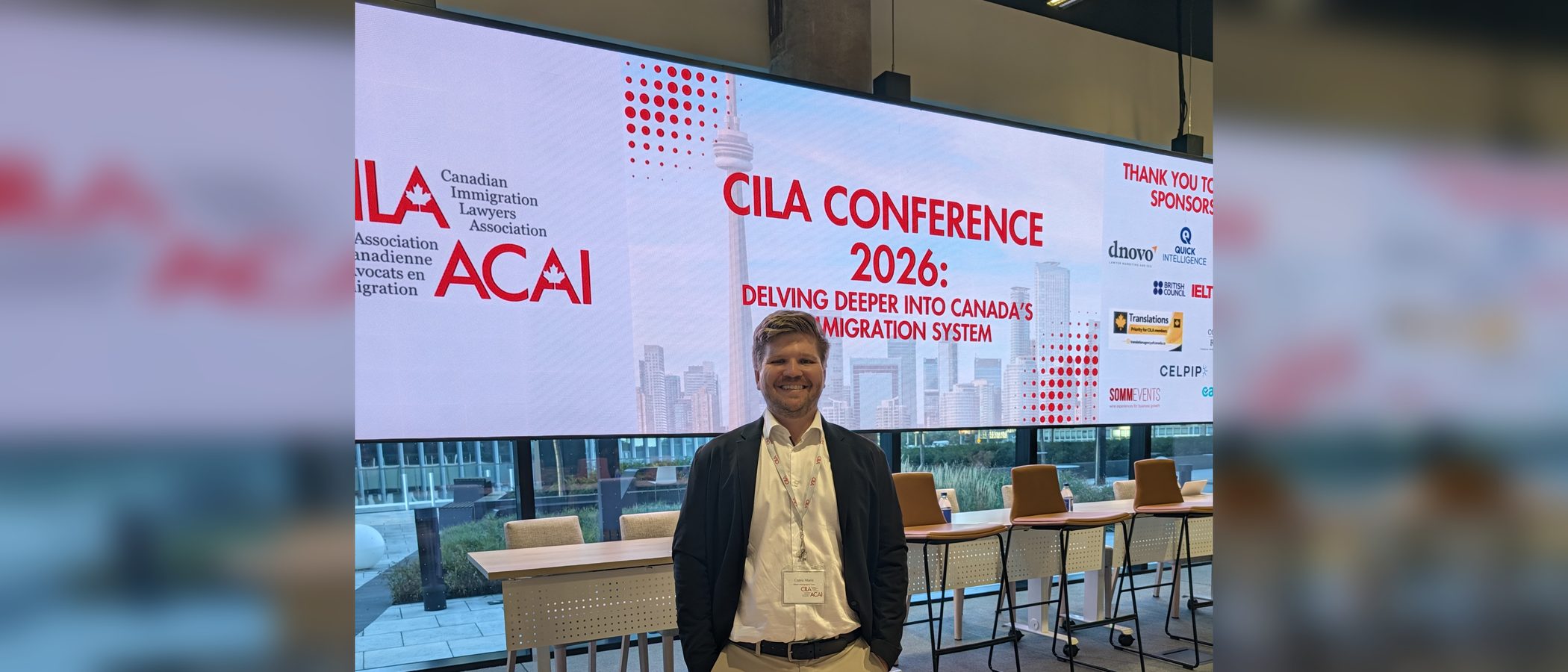
.png)

- IRCC published new versions of the CIT 0001 and CIT 0014 on August 25, 2026. In a written reply on August 26, 2026, its Director General of the Citizenship Program confirmed no application data fields changed.
- Applications already completed and signed on the previous version can still be submitted, and IRCC will contact the applicant if it needs more information. There is no formal grace period for older versions.
- On August 27, 2026, the CIT 0001 was revised again: the new question on the grandparents' date and place of marriage was removed, leaving a link to the CIT 0555 on page 7 and slightly revised language.
- The firm treats client signatures as fresh only within roughly 90 days, so an old-version form signed months ago should be redone. Anything not yet signed should be completed on the most recent form from the IRCC website.
[The above photo is Yonge Street, Queen to College Streets, east side, south of Shuter St, Toronto, Ontario Canada - circa 1910]
On August 25, 2026, IRCC published new versions of the two core documents in every proof of Canadian citizenship application: the CIT 0001, Application for a Citizenship Certificate, and the CIT 0014, Document Checklist. For firms with a steady pipeline of citizenship by descent files, a silent form update always raises the same questions. Do packages that are already signed have to be redone? Is there a grace period? Is a courier envelope that is sealed and ready to go now non-compliant?
Rather than guess, we put those questions to IRCC directly. The Director General of IRCC's Citizenship Program replied in writing on August 26, 2026, and the answer is reassuring.
What actually changed in the August 25, 2026 versions
According to the Director General's office, nothing changed in the data fields of the application itself:
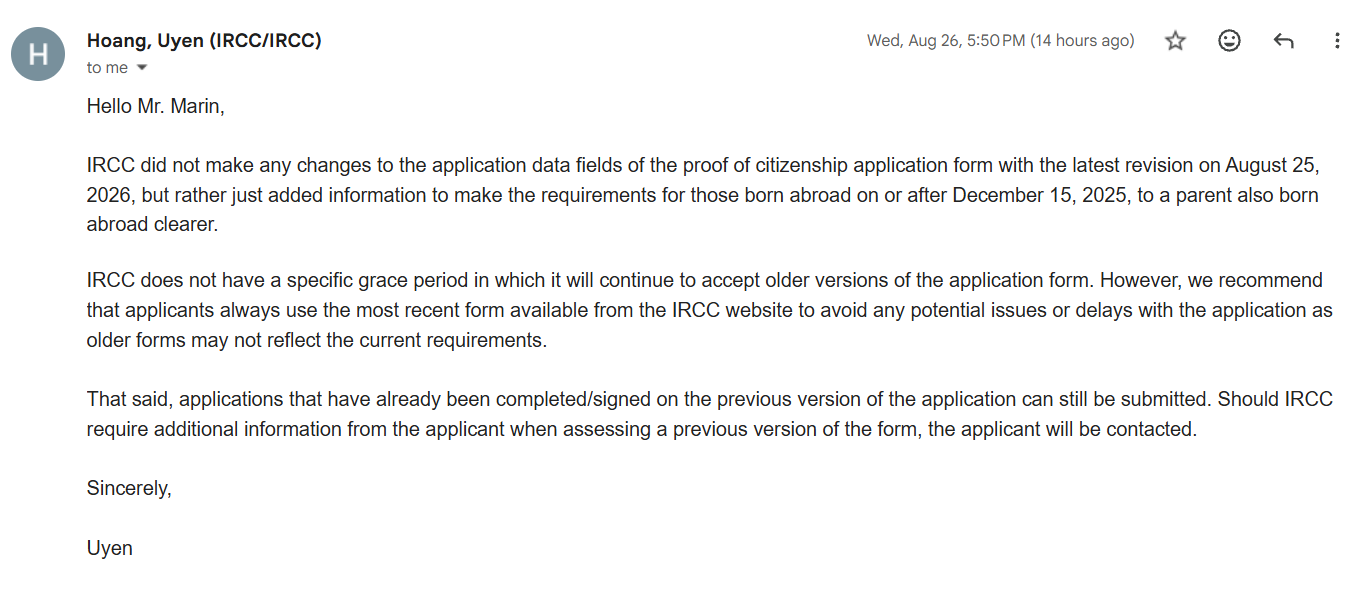
"IRCC did not make any changes to the application data fields of the proof of citizenship application form with the latest revision on August 25, 2026, but rather just added information to make the requirements for those born abroad on or after December 15, 2025, to a parent also born abroad clearer."
In other words, this is a clarification update aimed at the post Bill C-3 cohort: children born abroad on or after December 15, 2025 to a parent who was also born abroad, the group now subject to the substantial connection framework that replaced the first generation limit. The forms themselves collect the same information as before.
We know that they updated the place and date of marriage for the grand-parents in the CIT0001 form, but this information could be added on a separate piece of paper if the forms were signed before August 25, 2026.
Update (August 27, 2026): the CIT 0001 has been revised again
The CIT 0001 has since been revised again, and the latest version is available on the IRCC website. The new question about the grandparents' date and place of marriage has been removed. The only remaining changes are a link to the CIT 0555 form on page 7 and some slightly revised language.
Is there a grace period for the old versions?
No, and this is worth noting for file management:
"IRCC does not have a specific grace period in which it will continue to accept older versions of the application form. However, we recommend that applicants always use the most recent form available from the IRCC website to avoid any potential issues or delays with the application as older forms may not reflect the current requirements."
Can applications already signed on the previous version still be submitted?
Yes. This was the key confirmation:
"That said, applications that have already been completed/signed on the previous version of the application can still be submitted. Should IRCC require additional information from the applicant when assessing a previous version of the form, the applicant will be contacted."
Full reply below
Practical takeaways for practitioners
If a client's package is completed and signed on the previous version and is ready to go out the door, it can be submitted as is. In our practice we still treat client signatures as fresh only within roughly 90 days, so a signed old-version form that has been sitting in a drawer since spring should be redone on the current version in any event. For anything not yet signed, switch to the August 25, 2026 versions of the CIT 0001 and CIT 0014 immediately, since there is no formal grace period to rely on. And if you do submit on the prior version, note the possibility of a follow-up request from IRCC on the file and diarize accordingly.
Finally, if your file involves a child born abroad on or after December 15, 2025 to a parent who was also born abroad, read the updated instructions closely. The clarified language exists precisely because IRCC was seeing confusion about the requirements for that cohort.
Related reading. If the certificate is needed urgently, IRCC confirms urgent processing for booked air travel. For what IRCC’s own records show about how Bill C-3 claims are being handled, see five things we learned from our access to information request. On evidence, we cover surrender letters and the citizenship proof standard, identity documents for a child with only a passport, and citizenship by descent through a great-grandparent.
Marin Immigration Law focuses on Canadian citizenship by descent and proof of citizenship applications. This post is legal information, not legal advice.
Disclaimer: This blog is general information only, not legal advice, and may be incomplete or out of date. Laws change often. For advice on your situation, consult a qualified lawyer.
About our team
Five lawyers, a genealogist and a research team, all working on the same files.
Our lawyers have clerked at the Federal Court, decided claims at the Immigration and Refugee Board, served in Canada's foreign service and worked in the immigration groups of leading national firms. Kendra Gaede, our genealogist, chairs the Manitoba Genealogical Society's Research Committee and knows records from Quebec and Acadia to the Prairies. She leads the researchers who trace your family line and find the records that prove it.
2012 to 2016
Cédric Marin, our founder, studies civil law and common law at the University of Ottawa.
2017 to 2022
He clerks at the Federal Court of Canada, decides refugee claims and appeals at the Immigration and Refugee Board, and earns a Master of Laws.
2023
He opens Marin Immigration Law in Ottawa.
2025
Bill C-3 comes into force, and many more families with Canadian roots can claim citizenship.
2026
Four associate lawyers, a genealogist and a research team join, and we move into our office at 280 Albert Street.
Today
About 15 people, in Ottawa and across Canada.