
- About a 3,000% jump in demand for Quebec records since Bill C-3, with roughly 10 new hires each handling about 70 requests a day, almost all from Americans (unofficial figures shared by BAnQ staff).
- Two copies of every act for more than 300 years: from 1679 to 1993, each Quebec baptism, marriage and burial was recorded twice. BAnQ holds the State's copy once a record is about 100 years old.
- The Drouin Collection images online may not match the State's copy, so we file with the BAnQ act and order a certified copy.
- BAnQ does not provide copies on site. Order online, and do not travel there to request a record in person.
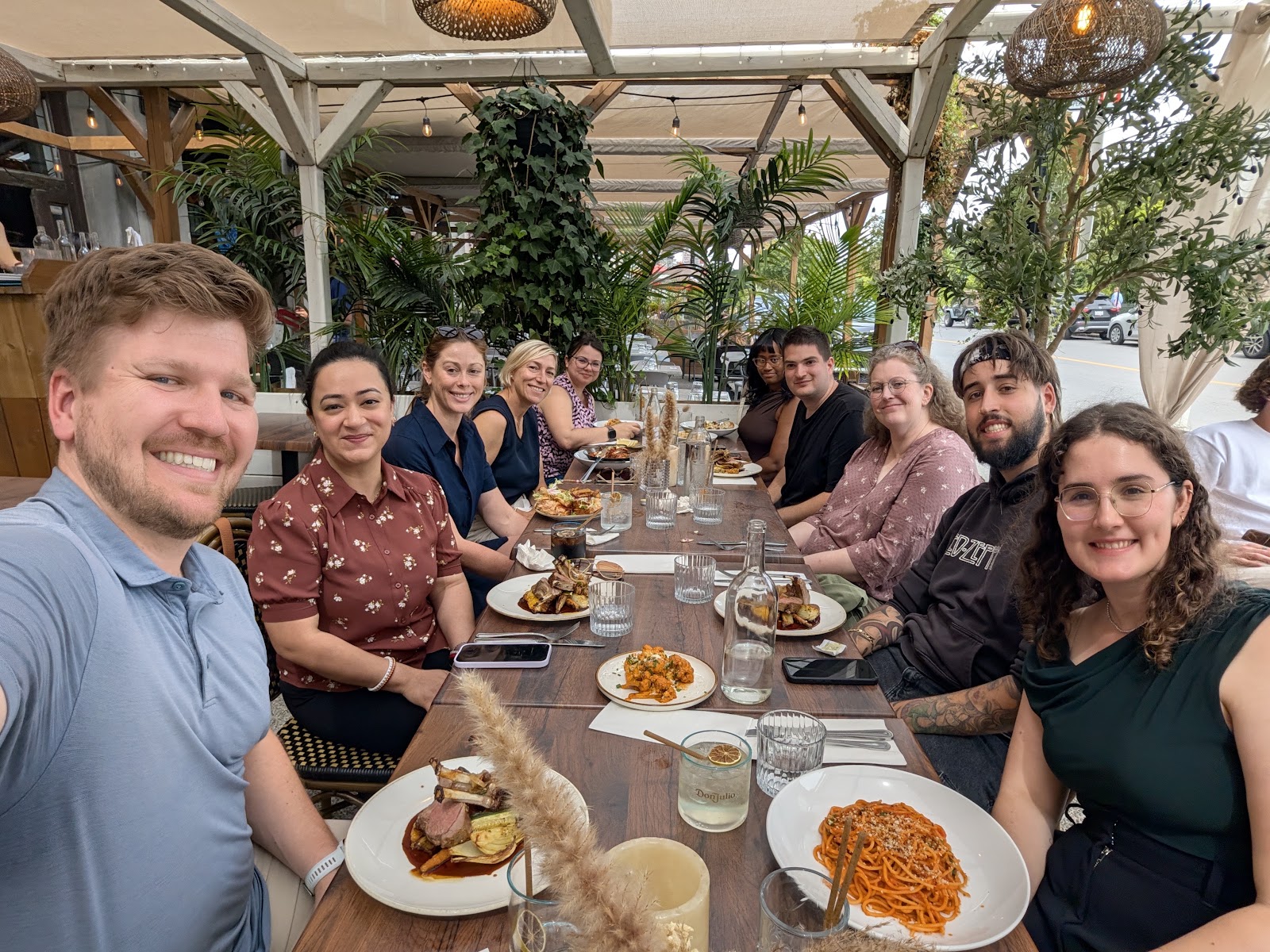
On August 20, 2026, Marin Immigration Law flew the entire team to Montréal for a behind-the-scenes visit to Bibliothèque et Archives nationales du Québec (BAnQ), the institution that holds Quebec's historic civil registers. BAnQ opens its doors to only about 25 group visits a year, and we were glad to be one of them. We brought our lawyers, legal assistants, research assistants and genealogy team, because the records kept in this building are the backbone of so many of our citizenship by descent files. Here is what we saw, room by room.
A Beaux-Arts building with a modern heart
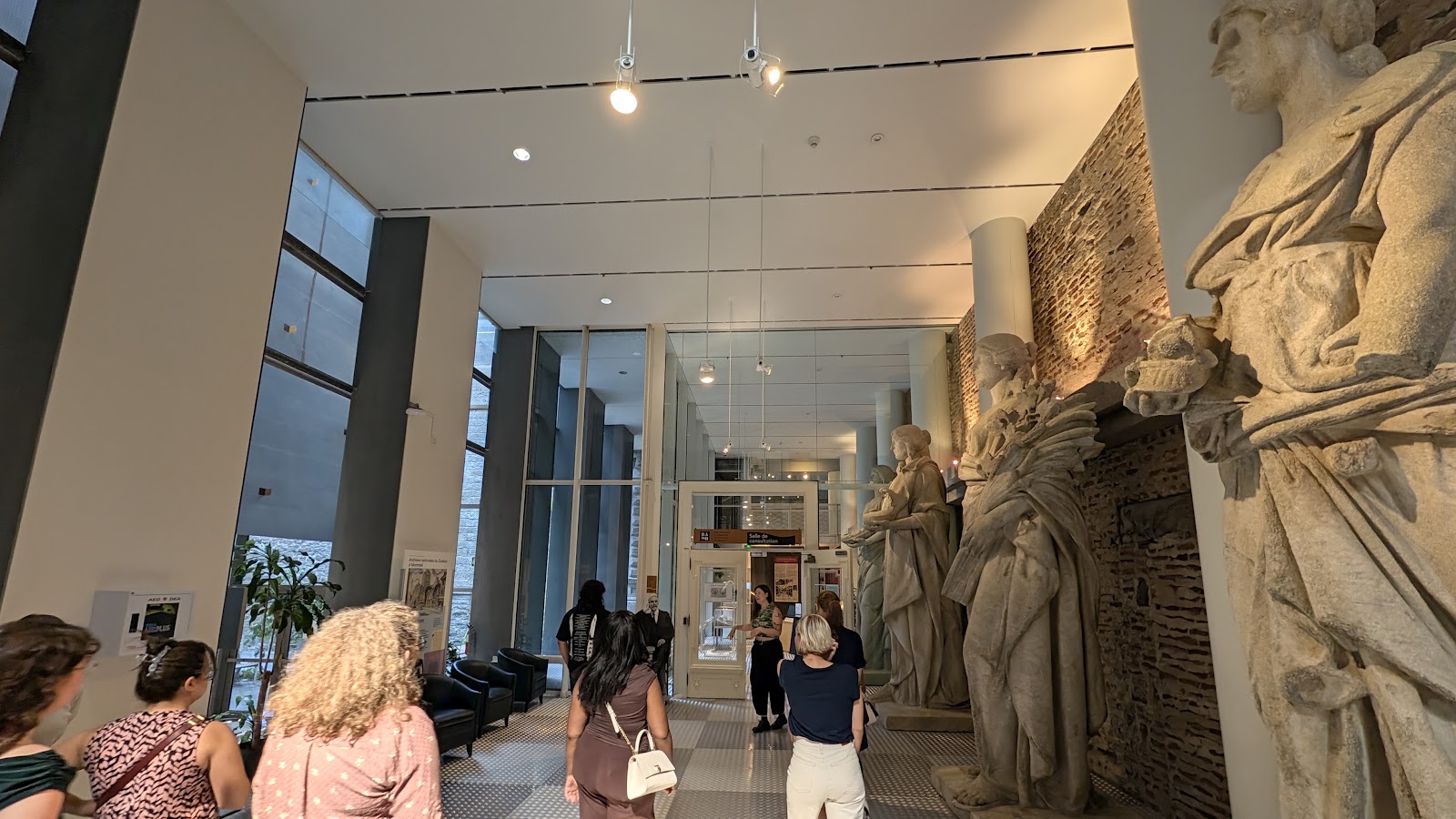
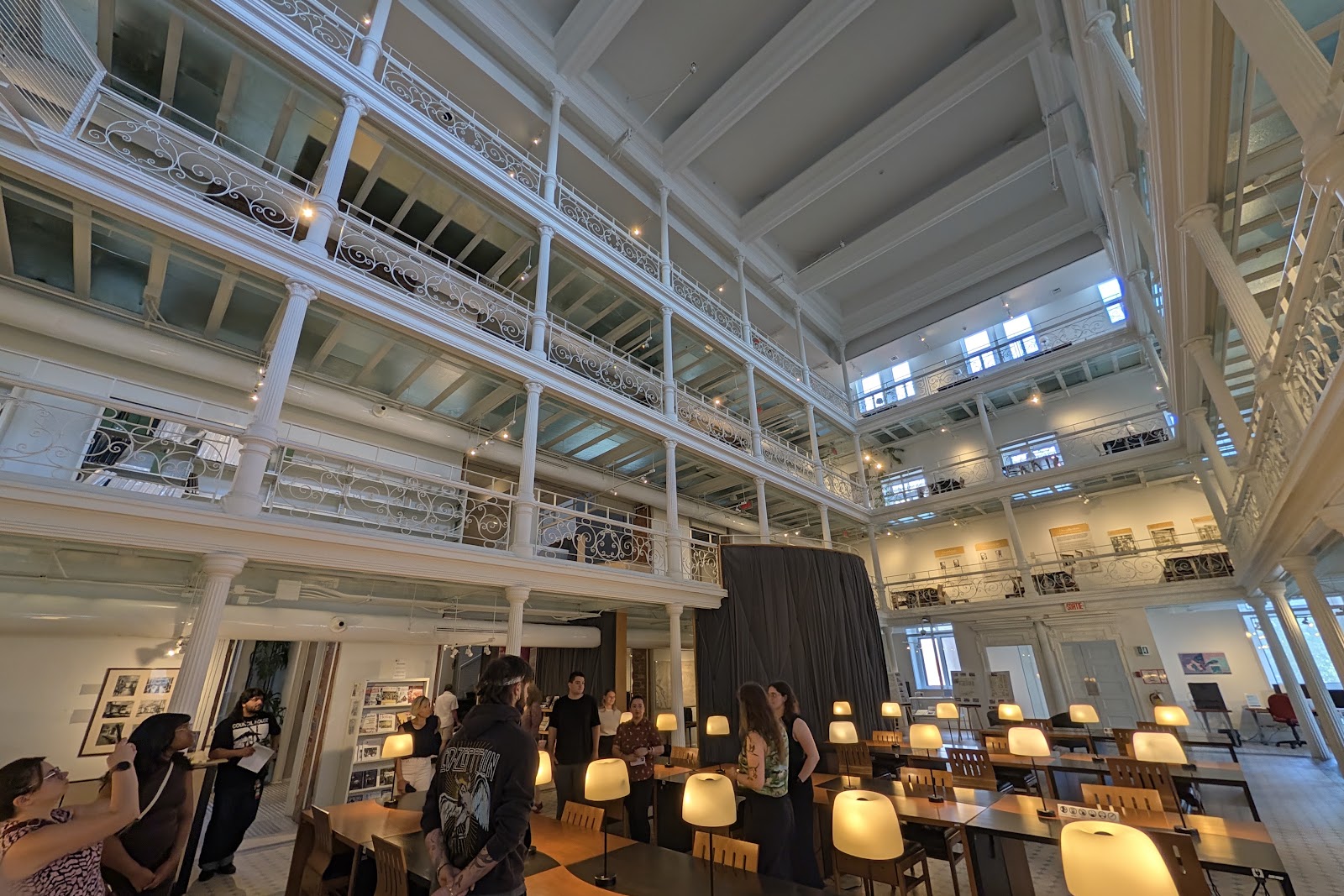
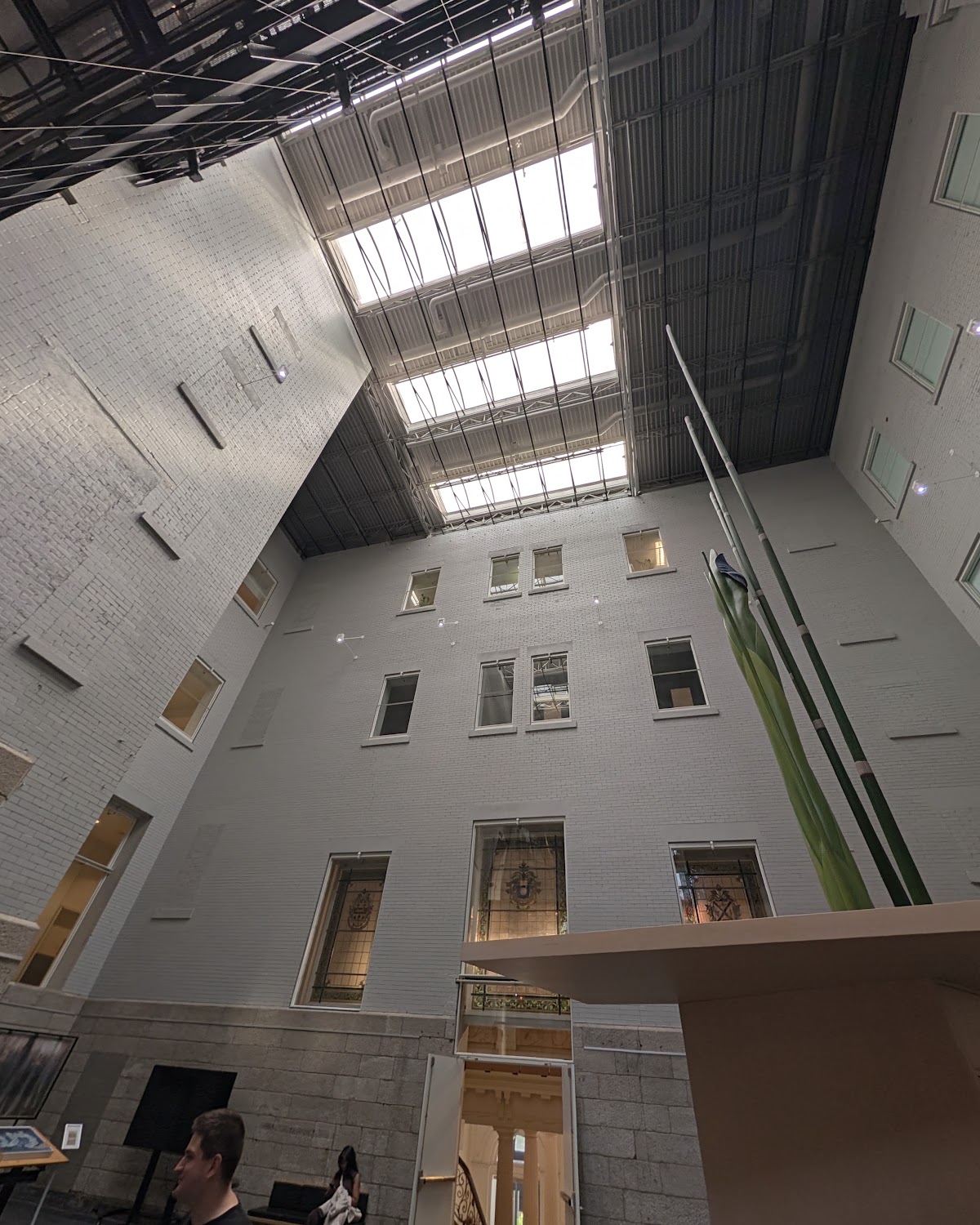
BAnQ's Archives nationales à Montréal sit on Viger Avenue in the Gilles-Hocquart building, a grand Beaux-Arts structure built in the early 1900s for the business school now known as HEC Montréal. You walk in past a row of classical statues, and then the building opens up into a bright, multi-level reading room with white iron balconies, a skylight and long wooden tables where researchers work with original records.
Into the vaults
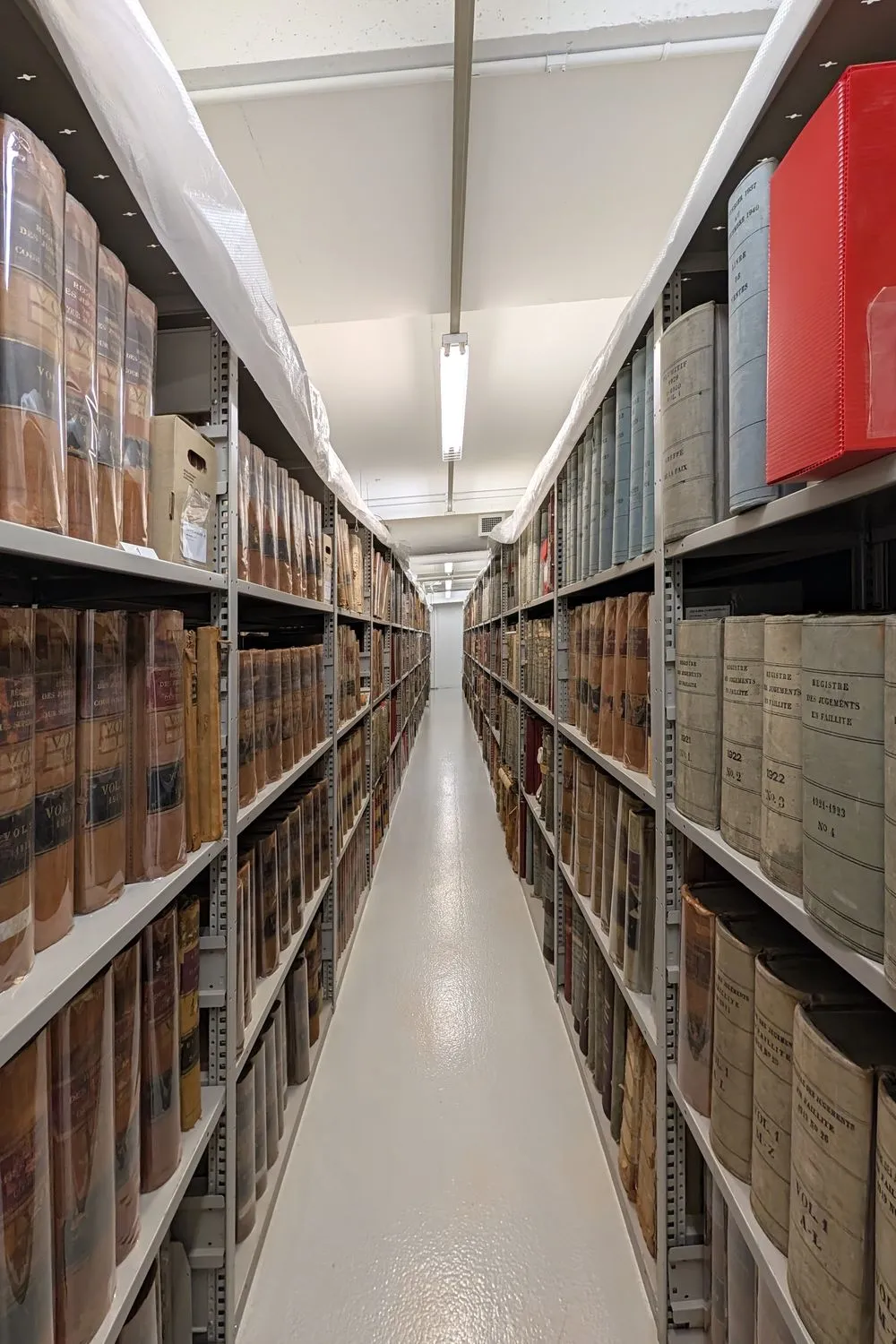
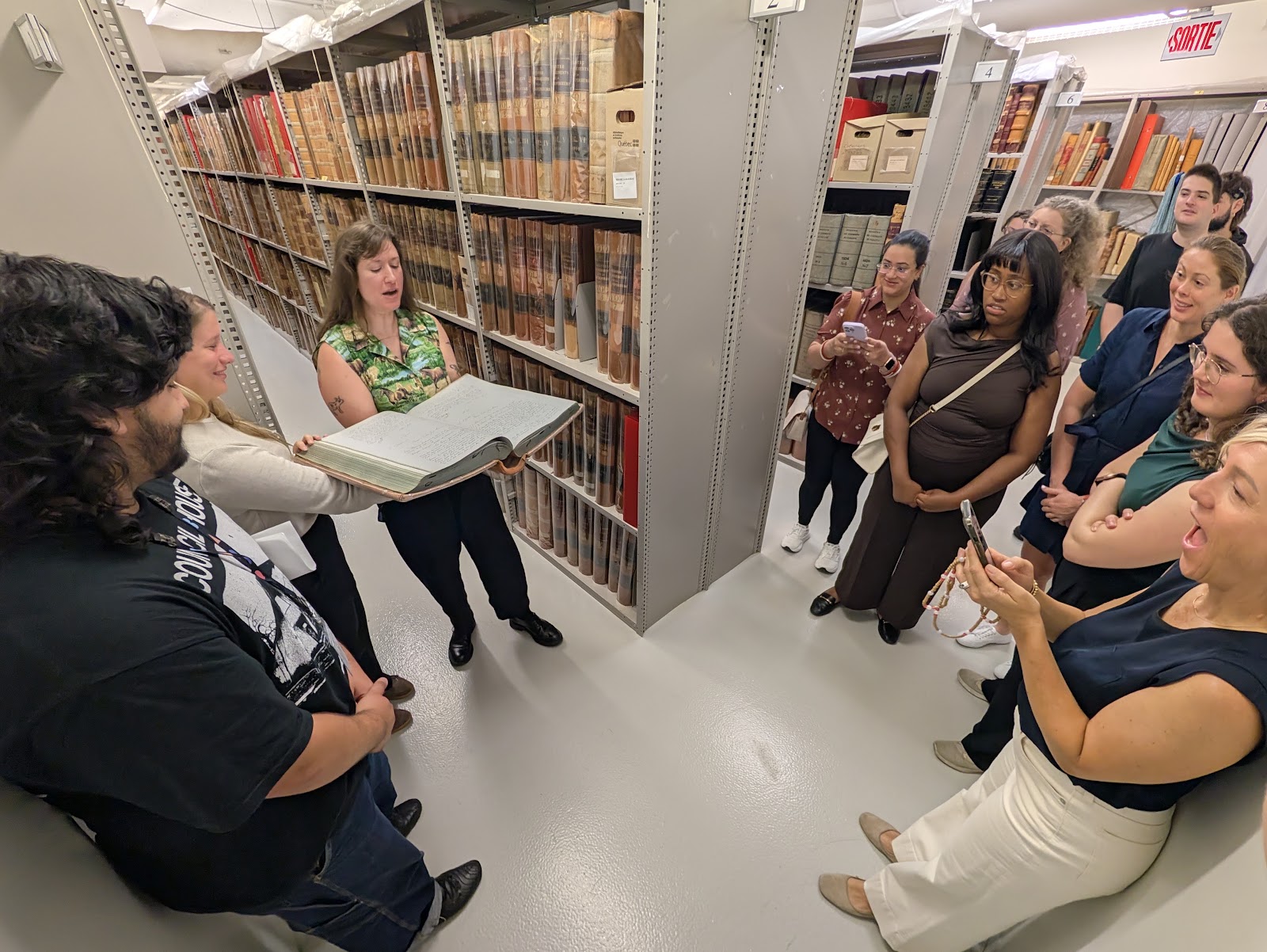
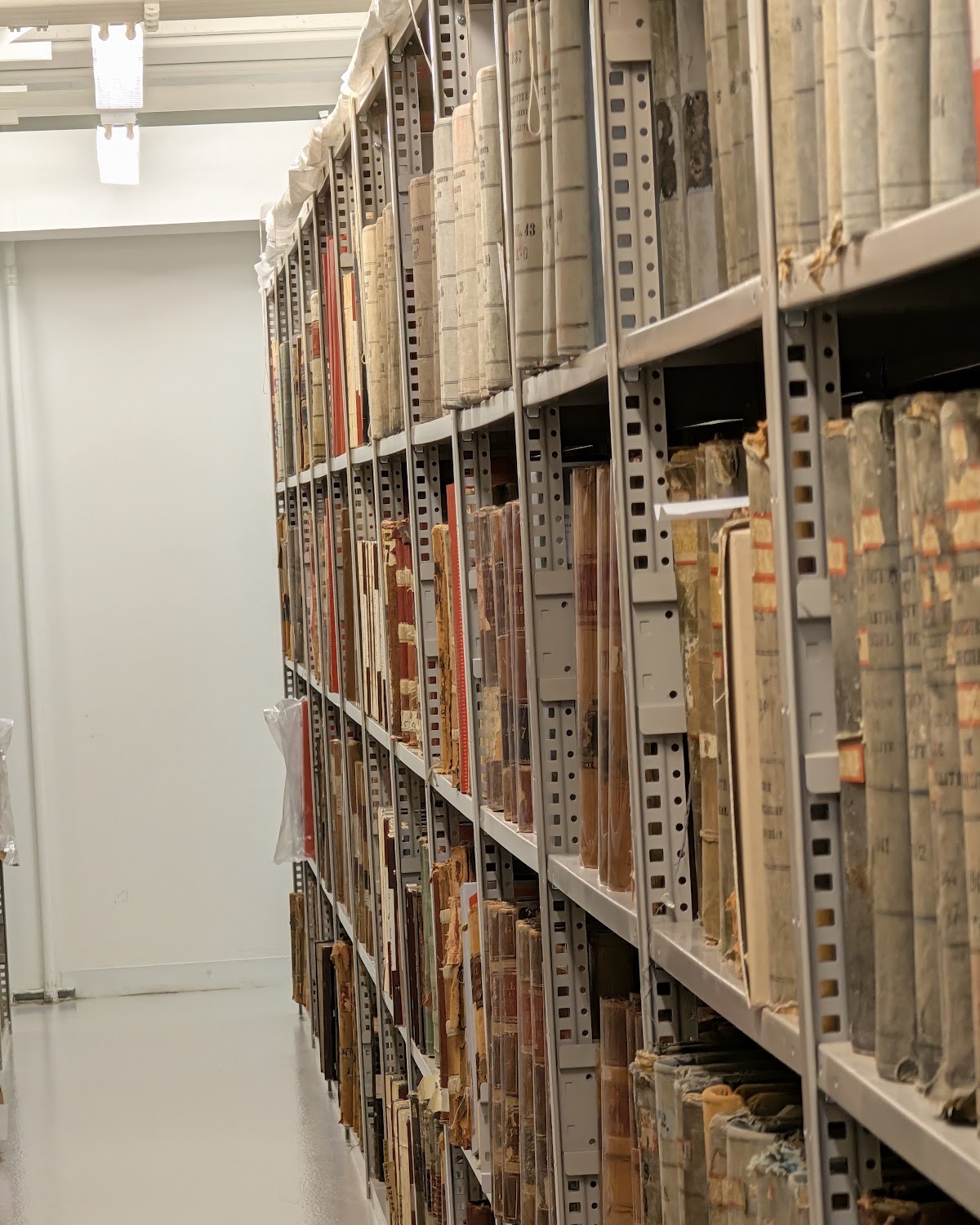
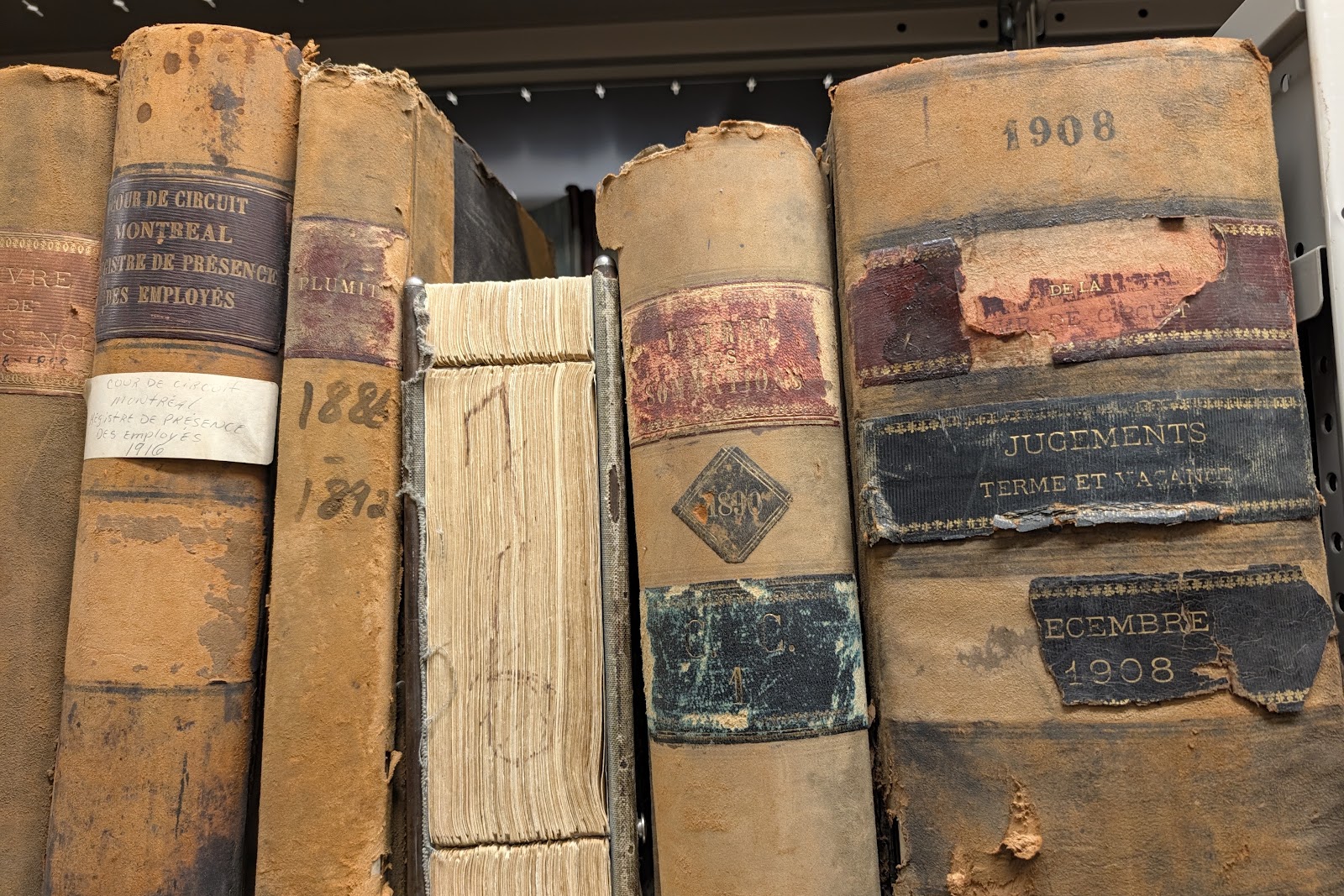
Our guides then took us behind the public areas and into the storage vaults, where row after row of bound registers are kept on metal shelving. Seeing them in person makes one thing very concrete: every Quebec baptism we cite in an application to IRCC is a handwritten entry in one of these books.
Why Quebec kept two copies of every record
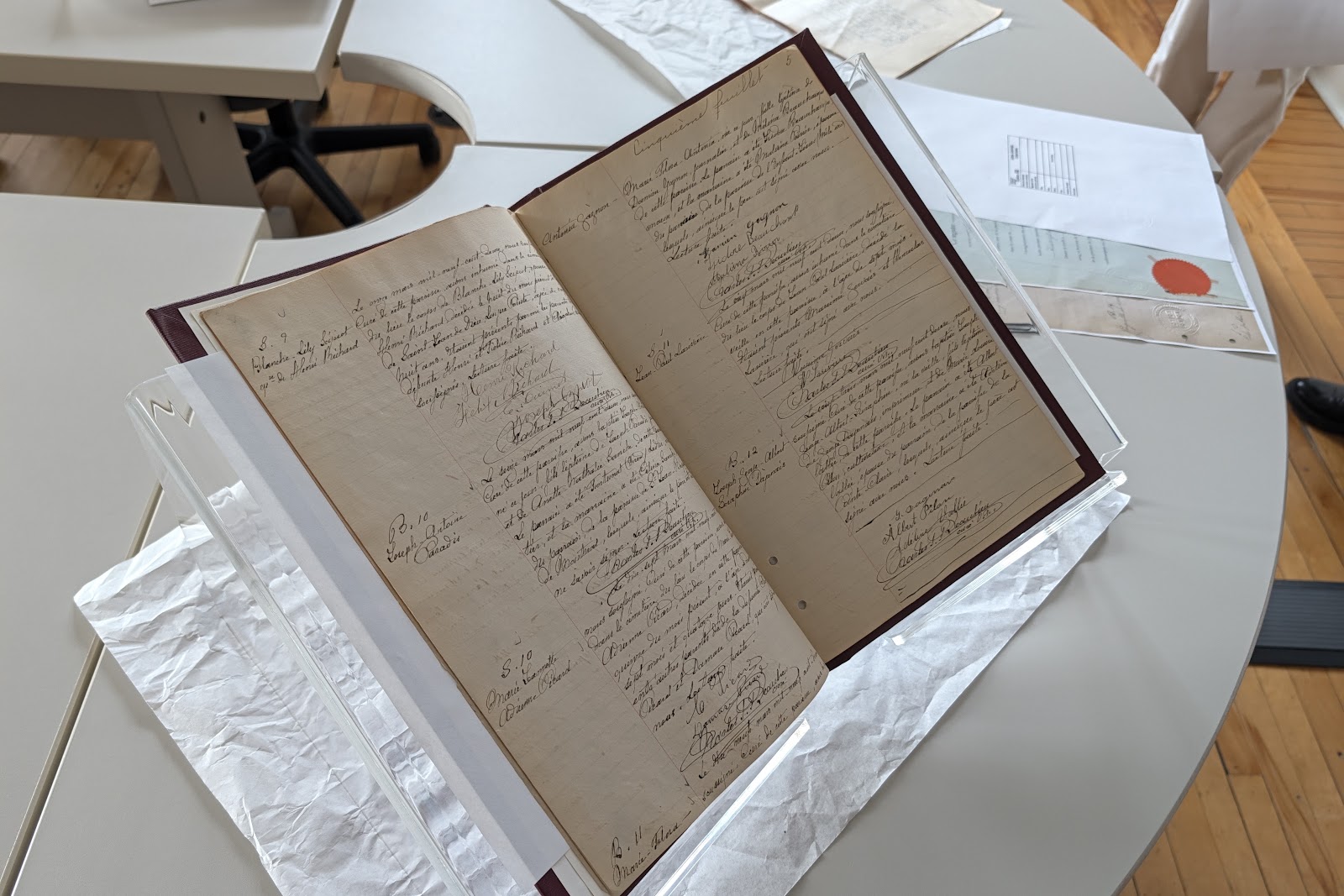
Quebec has some of the most complete civil records in North America, and the reason is a rule that lasted more than 300 years. From 1679 until the end of 1993, the parish priest or minister acted as the civil registrar. Each baptism, marriage and burial was written in two registers: one stayed with the parish, and the second was filed with the local courthouse. If a church burned or a register went missing, the duplicate survived.
Those courthouse copies are the State's copy, and once they are about 100 years old they move from Quebec's Directeur de l'état civil (DEC) to BAnQ. That is why, for an ancestor born in Quebec before 1994, the baptism is not a religious substitute for a birth certificate. It is the civil record of the birth. We explain how this plays out with the DEC in our post on Quebec birth certificates for citizenship by descent.
The originals, up close
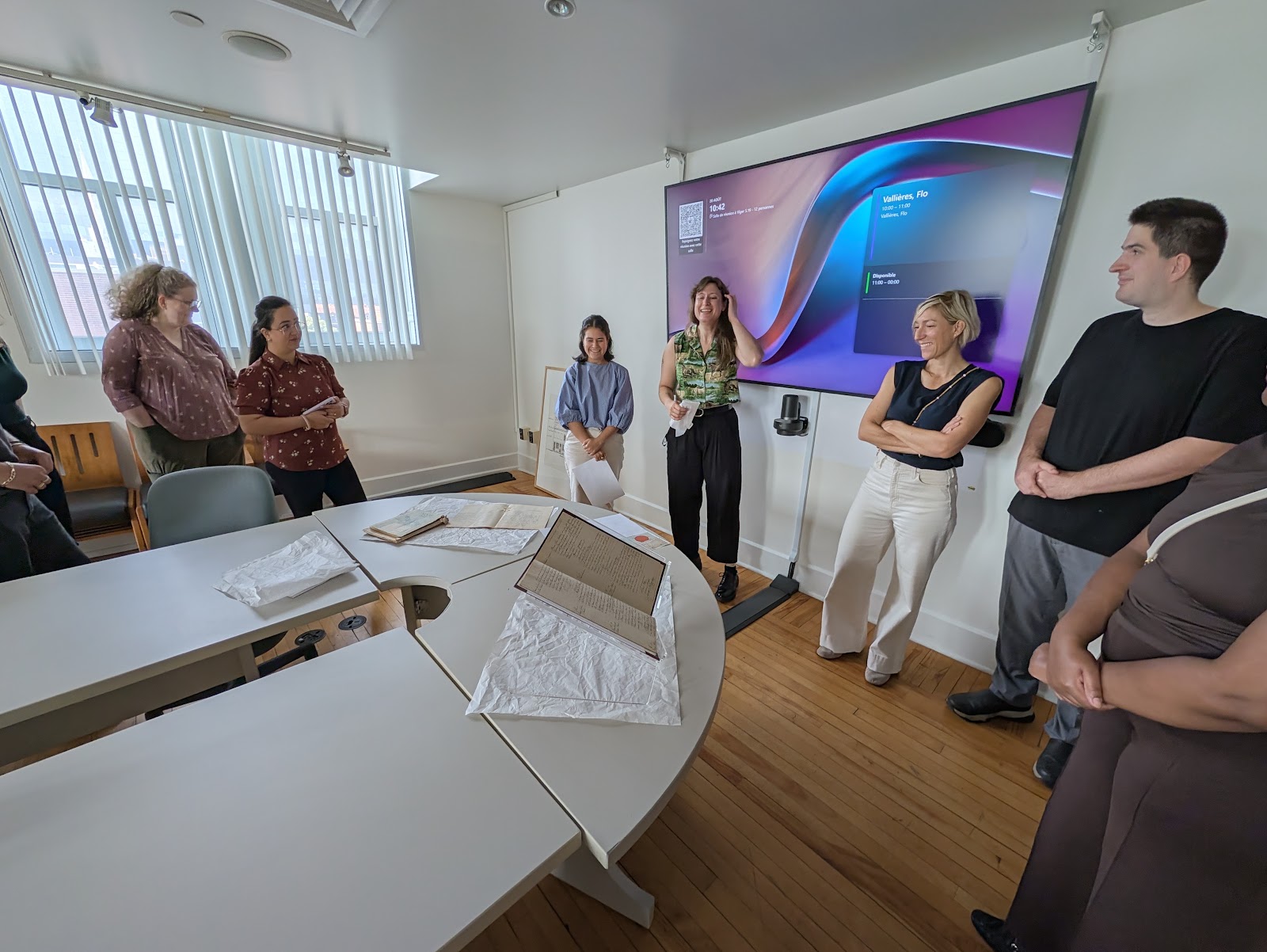
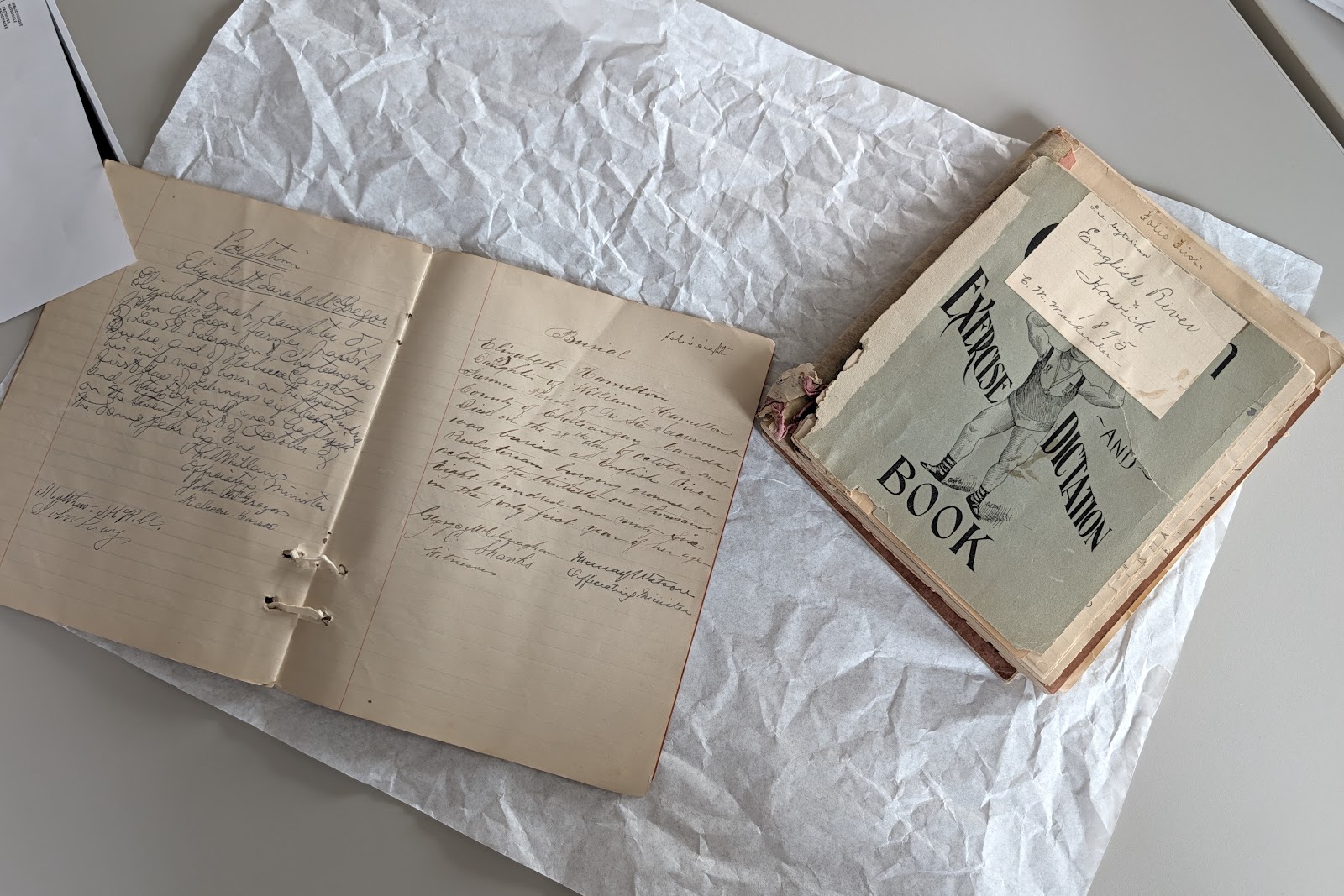
In a meeting room upstairs, BAnQ staff laid out original documents for us on protective stands and archival tissue, and walked us through how records are kept, retrieved and copied.
Quick stats (unofficial)
BAnQ staff shared a few numbers with us during the visit. These are not official BAnQ figures or guidance, just what we heard in conversation, so take them with a grain of salt:
- About a 3,000% increase in demand for records since Bill C-3.
- 10 people hired since Bill C-3 to keep up.
- About 70 requests per day handled by each of those staff members.
- Almost all of the new requests come from Americans looking for proof of a Canadian ancestor.
If you are waiting on a Quebec record, this is the context. The delays are not neglect. They are an archive adjusting to a wave of interest it has never seen before. For more on what Bill C-3 changed, see Bill C-3: Americans with Canadian ancestry.
Where certified copies are made
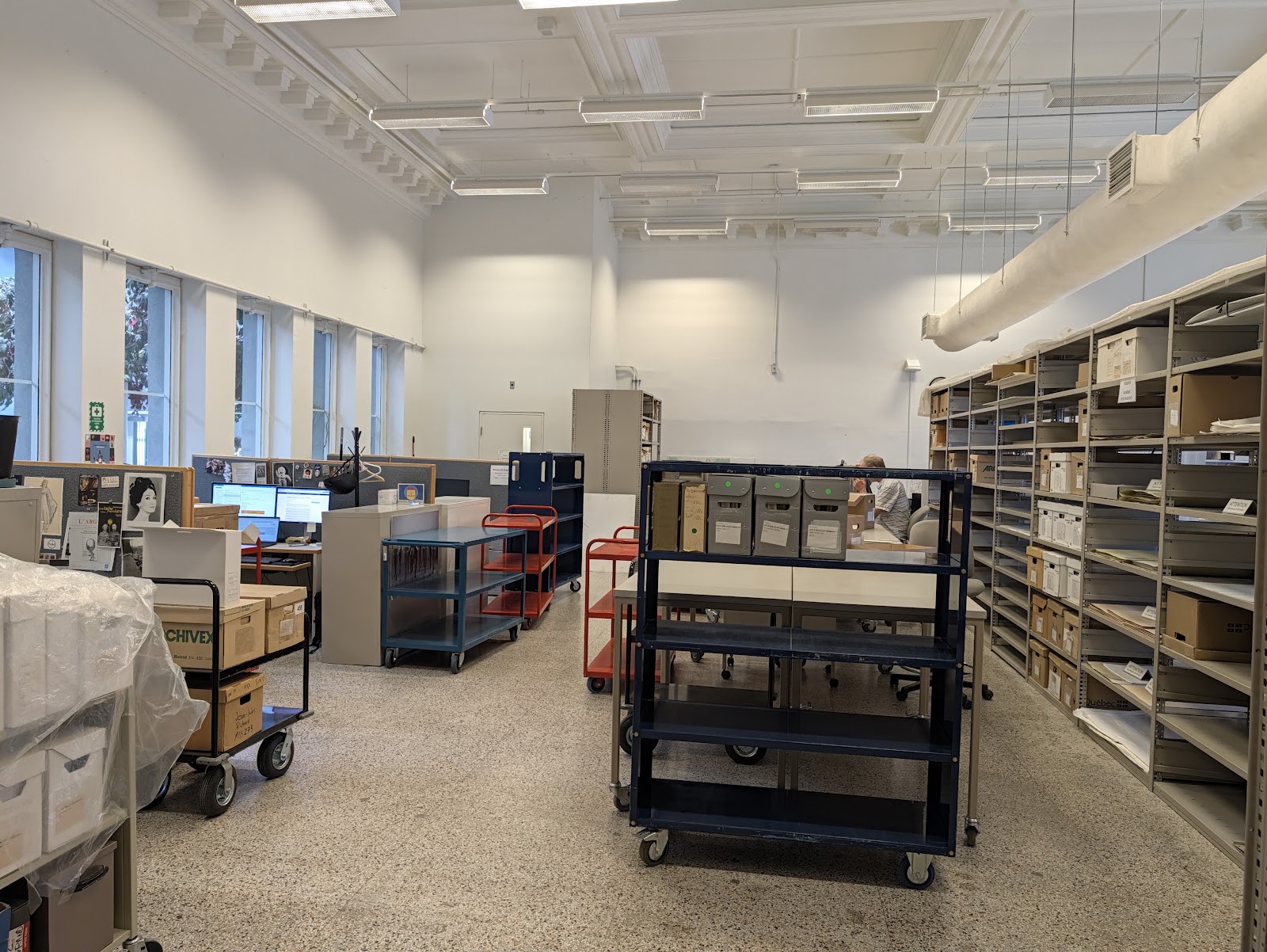
We also saw the workroom where staff pull registers from the vaults and prepare certified copies. When you order a certified copy from BAnQ, staff check the actual register, not an index or a transcription. For an IRCC application, that matters: the certified copy reflects the source.
The Drouin Collection is not the same as the State's copy
Many families first find their Quebec ancestors in the Drouin Collection, the well-known images of Quebec registers available through genealogy websites. It is an extraordinary resource, but it is a microfilm made at a particular point in time, mostly in the 1940s, and the Drouin Institute filmed some registers at the courthouse and others at the parish. Because the two copies of each act were written out separately by hand, the Drouin image you found online may not be the same copy BAnQ holds as the State's copy, and spellings, dates or other details can differ slightly between them.
For a citizenship application, those small differences can raise questions with an IRCC officer. That is why our practice is to file with the act from the BAnQ register and its BAnQ link, order the BAnQ certified copy, and apply to the DEC in parallel. IRCC is also asking more often for records from the original record keeper, which is the same reason we now rely on Library and Archives Canada records for census evidence.
The sign on the door: please do not come in person
On our way out, we noticed two signs on the front door. The first, in French, lists the reading room hours. The second is in English only:

The notice says BAnQ does not provide copies of baptism, marriage or burial records on site and will not follow up on requests at the door. To get a certified copy, including for a Canadian citizenship application, you must fill out the online form at banq.qc.ca and wait to be contacted.
There is some irony here. Quebec has some of the strictest language rules in the country, and French must be on public signs. This one is in English only. It does not say "Americans," but it does not really need to.
The message is clear: do not go in person. Apply online at banq.qc.ca.
Afternoon in Old Montréal: Pointe-à-Callière
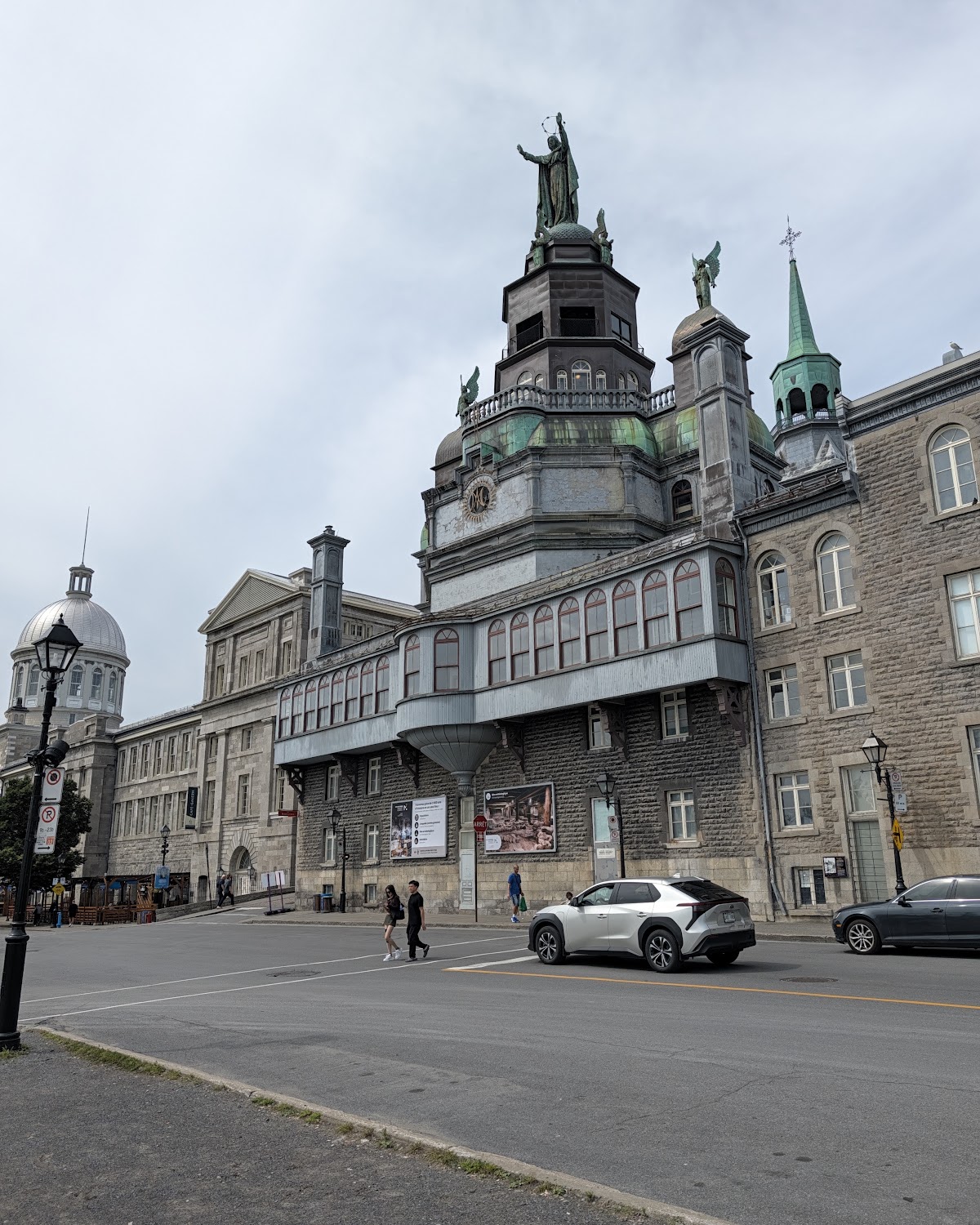
After lunch, we walked through Old Montréal, past Notre-Dame-de-Bon-Secours Chapel and Bonsecours Market, to Pointe-à-Callière, Montréal's archaeology and history museum. The museum is built on the spot where Montréal was founded in 1642, and you can stand on glass floors above the stone foundations of the early settlement.
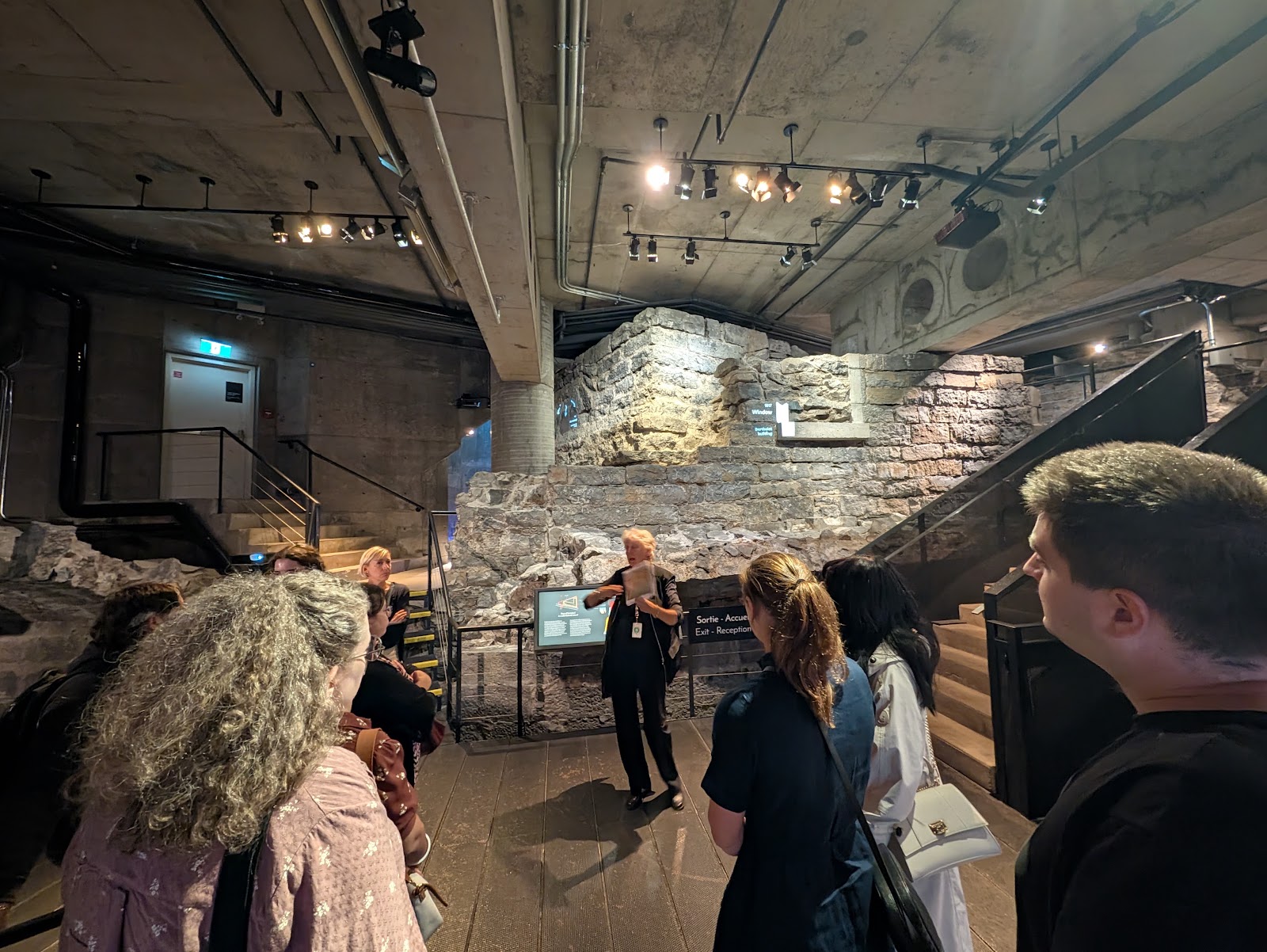
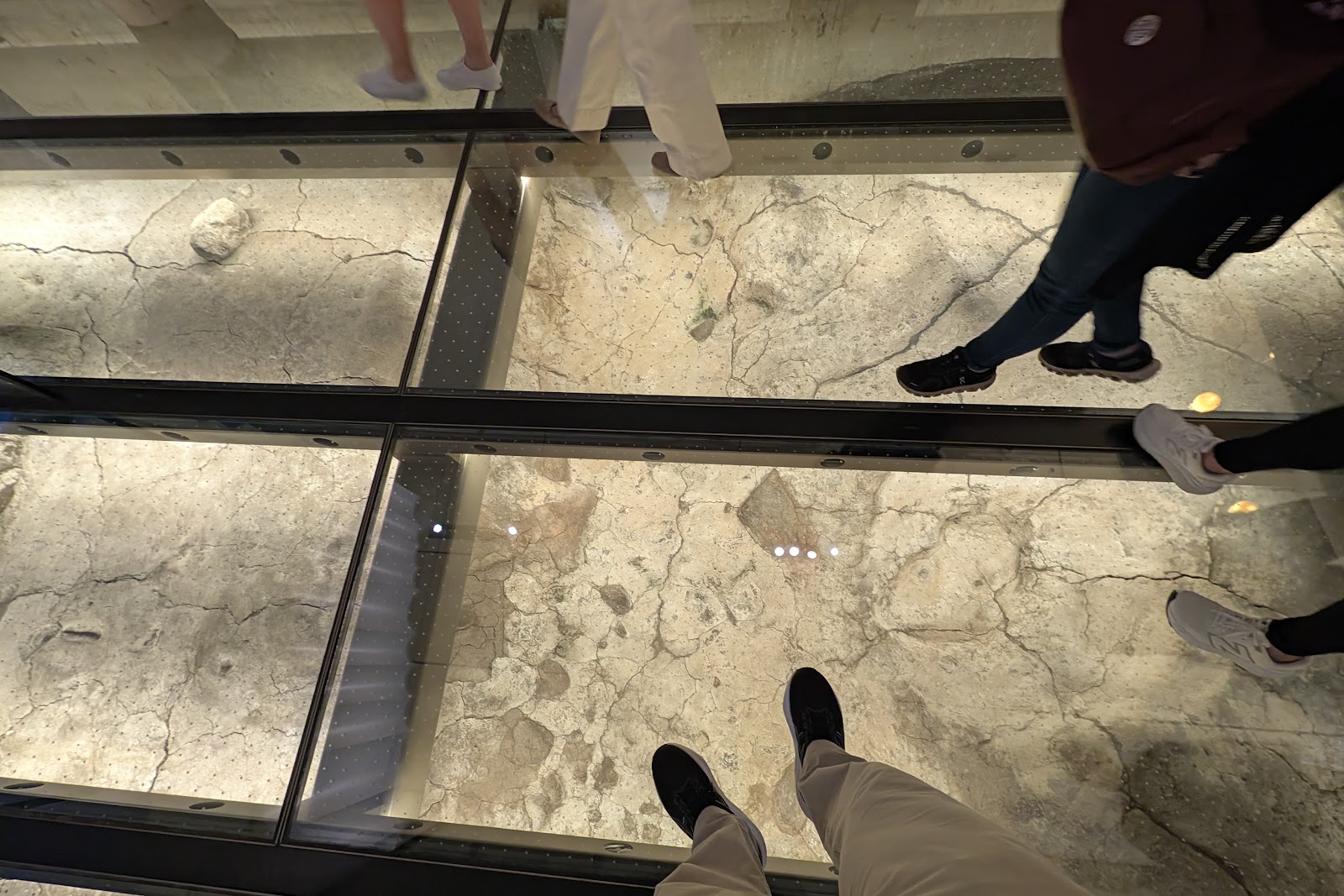
For our team, this was the most moving part of the day. Many of the families we work with trace their lineage back to New France, and many of their ancestors likely passed through Montréal at some point. Standing over the foundations of those first buildings, it was easy to picture the people whose baptisms we had just seen on the shelves at BAnQ.
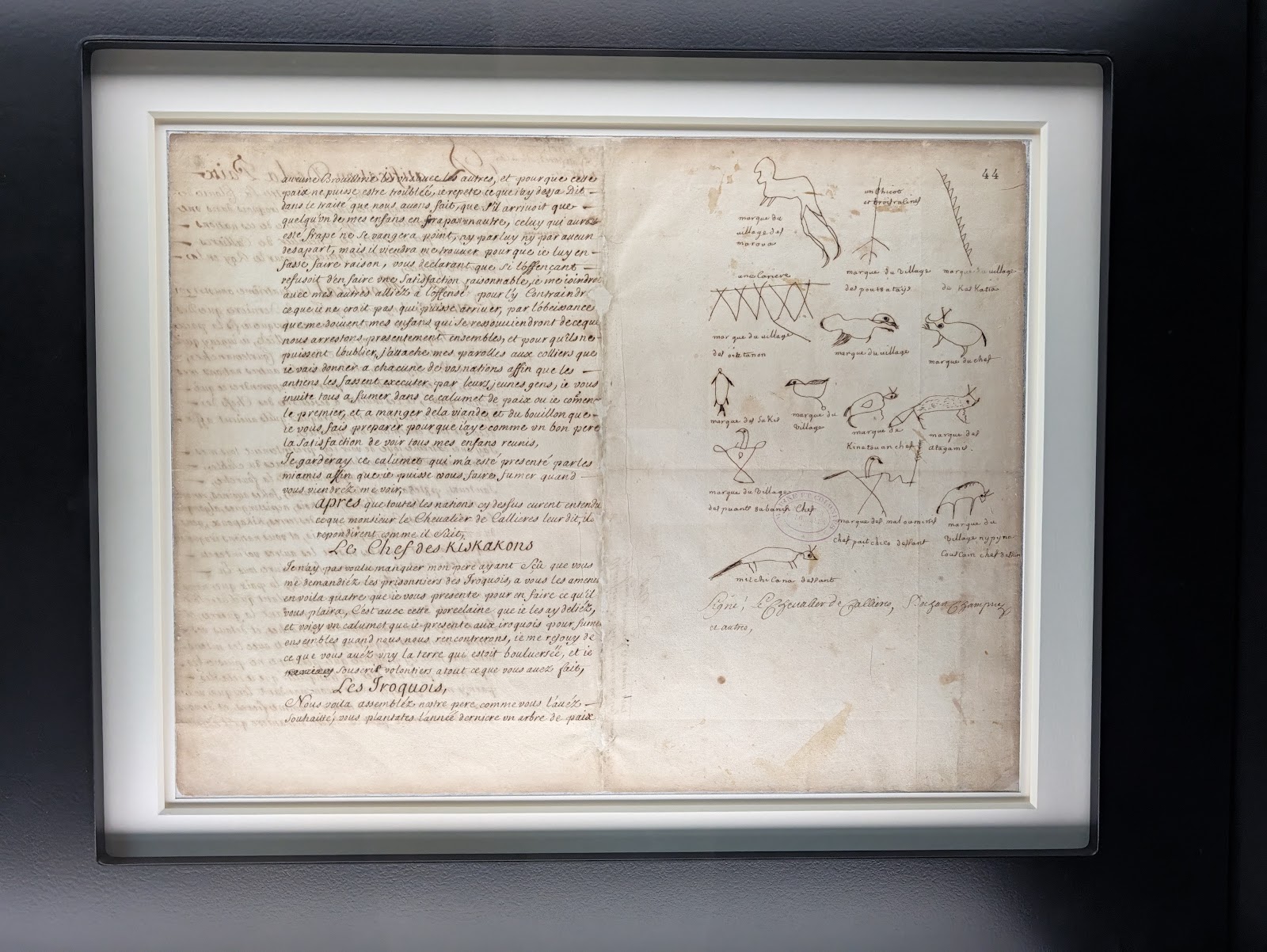
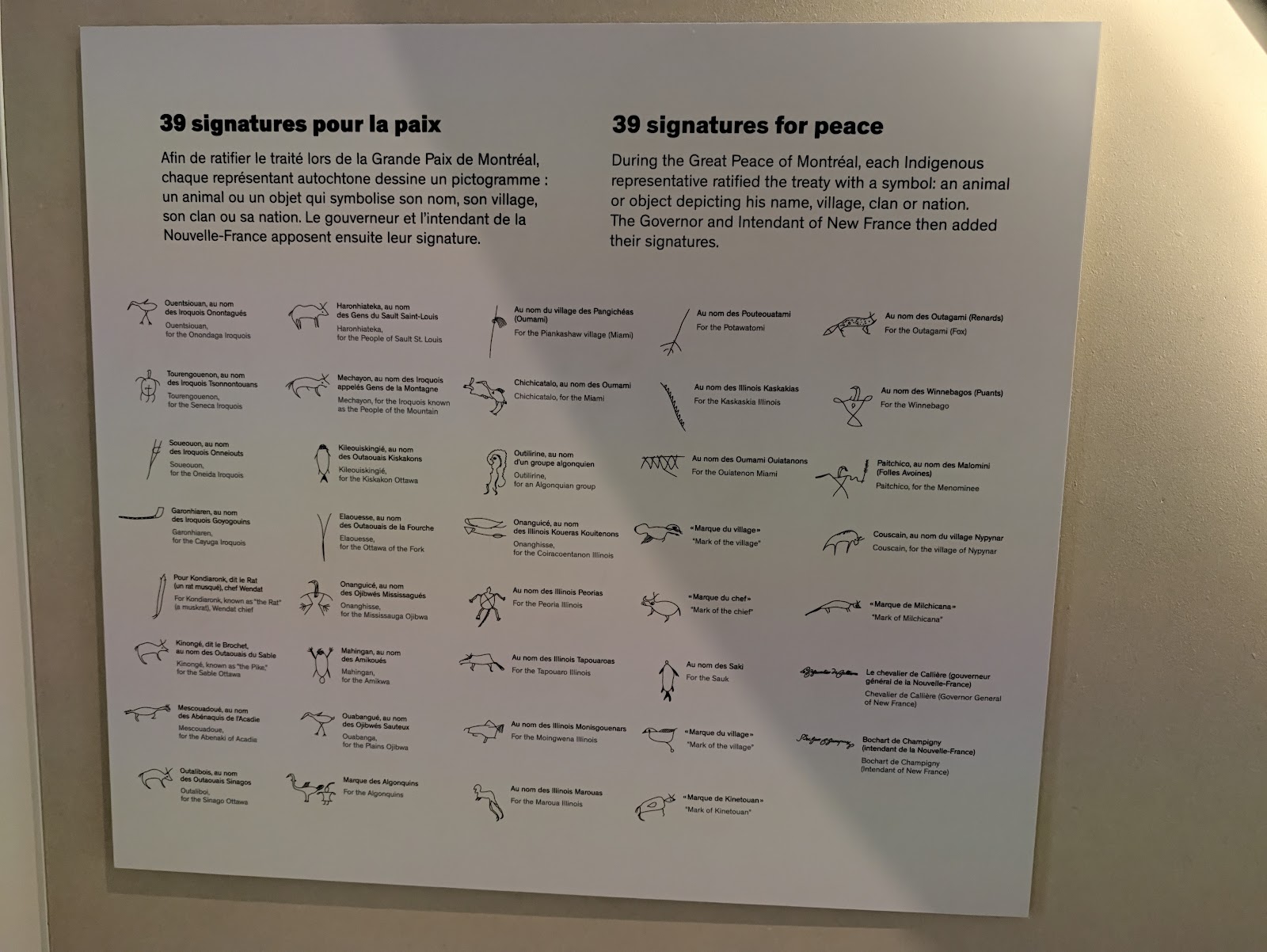
The museum also tells the story of the Great Peace of Montréal of 1701, a treaty between New France and dozens of Indigenous nations, whose representatives signed with pictographic marks.
What this means for our clients
Our visit confirmed what we see every day: Quebec records are some of the strongest evidence available for citizenship by descent, but getting the right copy of the right record takes care. We came home with a clearer picture of how BAnQ works, a better sense of the pressure it is under, and a refined internal process for ordering Quebec records. If you want to see how we approach these files more broadly, read lessons learned from our recent citizenship by descent files and citizenship by descent through a great-grandparent.
Our thanks to our BAnQ guides Flo, Zoé and Ibrahim, and to Sarah from the records team, for their time and generosity.
If your Canadian ancestor was born or baptized in Quebec and you are wondering whether you are a Canadian citizen under Bill C-3, our citizenship and immigration lawyers and in-house genealogy team can help. Book a consultation to discuss your family history.
Disclaimer: This blog is general information only, not legal advice, and may be incomplete or out of date. Laws change often. For advice on your situation, consult a qualified lawyer.
About our team
Five lawyers, a genealogist and a research team, all working on the same files.
Our lawyers have clerked at the Federal Court, decided claims at the Immigration and Refugee Board, served in Canada's foreign service and worked in the immigration groups of leading national firms. Kendra Gaede, our genealogist, chairs the Manitoba Genealogical Society's Research Committee and knows records from Quebec and Acadia to the Prairies. She leads the researchers who trace your family line and find the records that prove it.
2012 to 2016
Cédric Marin, our founder, studies civil law and common law at the University of Ottawa.
2017 to 2022
He clerks at the Federal Court of Canada, decides refugee claims and appeals at the Immigration and Refugee Board, and earns a Master of Laws.
2023
He opens Marin Immigration Law in Ottawa.
2025
Bill C-3 comes into force, and many more families with Canadian roots can claim citizenship.
2026
Four associate lawyers, a genealogist and a research team join, and we move into our office at 280 Albert Street.
Today
About 15 people, in Ottawa and across Canada.