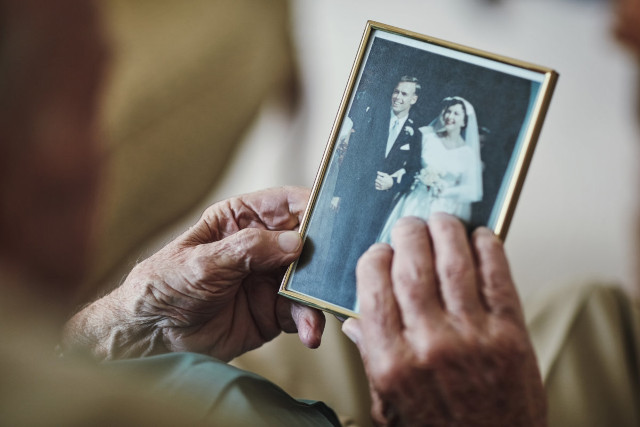
Many Americans with a Canadian grandparent or great-grandparent were told they cannot claim citizenship because their Canadian claim stopped at their parents.
Until recently, that was often correct.
From 2009 to December 15, 2025, a rule called the “first-generation limit” allowed citizenship by descent to pass only to the first generation born outside Canada.
Bill C-3 removed that limit. Whether you still qualify depends on your dates and documents, but the generational cutoff that stopped many people is gone.
Another common misconception is that your anchor relative automatically “gave up” Canada when they became American.
This guide explains who the "Lost Canadians" are, what Bill C-3 changed, and what to do next.
Who Are the "Lost Canadians"?
"Lost Canadians" is an umbrella term, not a single legal category.
It covers people who lost Canadian citizenship, never had it recognized, or were cut off from it by older versions of the Citizenship Act, despite a real connection to Canada through birth or ancestry.
Some were Canadian and lost it under a rule that no longer exists. Others should have been Canadian from birth but were blocked by discriminatory or technical provisions requiring them to retain their citizenship.
"The common thread is a person whose claim to Canada was severed or never recognized by a law that has since been seen as unfair or unconstitutional. Bill C-3 is the most recent step in a long series of fixes to those problems."
Cédric Marin
The Main Historical Groups
The “Lost Canadians” label is used for groups such as:
- Second-generation-and-beyond, born abroad. Blocked by the first-generation limit. This is the largest group today, and the one Bill C-3 directly addresses.
- People born in Canada before 1947 who ceased to be British subjects and were never made citizens when Canadian citizenship began on January 1, 1947. This group was addressed in paragraph 3(1)(k) to 3(1)(r) of the Citizenship Act.
- Maternal-line discrimination. Women who lost status by marrying a non-Canadian, and women who could not pass citizenship to children born abroad in the same way as men could.
- Old "retention" rules. A person born abroad had to take a positive step, such as registering or applying to retain citizenship by a certain age, and could lose status if they did not.
Groups such as war brides and their children are also widely discussed under the label. They were largely addressed by the 2009 and 2015 amendments rather than by Bill C-3.
These are historical descriptions. Whether a particular person qualifies depends on dates, documents, and the law that applied at each point in the family chain.
What Bill C-3 Actually Fixes (and What Earlier Amendments Already Did)
Bill C-3 did not solve every historical injustice on its own.
The 2009 and 2015 amendments already restored citizenship to many Lost Canadians, including pre-1947 British-subject losses and many maternal-discrimination categories.
What stopped many people from benefiting was the first-generation limit, which was also introduced in 2009. That rule generally said citizenship by descent stopped at the first generation born outside Canada.
On December 15, 2025, Bill C-3 removed that limit. For a broader overview, see our earlier guide to Bill C-3 and Americans with Canadian ancestry.
"C-3 does not invent a brand new class of citizen out of nothing. It removes the cap that was preventing the earlier fixes from cascading down to the later generations."
Cédric Marin
How the Remedy Works for the Second-Generation-Born-Abroad Group
Before vs. After December 15, 2025
Before: only the first generation born abroad to a Canadian was automatically a citizen by descent, with narrow exceptions, such as a Canadian parent working abroad in government or military service. The cut-off also blocked the third generation and beyond.
After: people in the second generation or later who were born before December 15, 2025 may now be recognized as Canadian citizens, as long as each parent in the chain was Canadian at the time of the next child’s birth, and an older rule does not break the line.
This does not mean every older line works. Pre-1947 status rules, retention rules, maternal-line issues, adoption, and formal renunciation can still matter, depending on the dates and documents.
Citizen by Law vs. Proving It
If you qualify, you are not suddenly becoming Canadian, nor are you immigrating; you are simply a Canadian citizen by operation of law.
But being a citizen and proving it are two different things.
To act on your status, such as getting a passport, you need a citizenship certificate, the proof of Canadian citizenship, which you apply to Immigration, Refugees and Citizenship Canada (IRCC) for.
"As I tell clients, you are claiming a pre-existing status the government simply had not recognized yet. You are deemed a Canadian."
Cédric Marin
The Date Logic & The 1,095-Day Rule
If you were born before December 15, 2025, you are covered by C-3’s broad generational inclusion with no residence condition. The same rule applies to your children or grandchildren.
If you are a citizen by descent who has a child abroad on or after December 15, 2025, that child is a citizen only if you, the parent, accumulated at least 1,095 days, or three years, of physical presence in Canada before the birth.
Does It Carry Forward to That Person’s Children?
For children born before December 15, 2025, there is no cap. Once you are recognized, your children born before that date are citizens too, if you can prove the chain.
For children born on or after December 15, 2025, the analysis resets and depends on your own days in Canada.
"Am I a Lost Canadian?" Real-World Signals
These are tells, not conclusions. They do not mean you qualify for Canadian citizenship, only that it may be worth looking into.
Common Life-Story Signals
- "My grandparent or great-grandparent was born in Canada, my parent was born in the US, and I was told citizenship skipped a generation."
- A Canadian-born ancestor who moved to the US for work and later naturalized.
- A grandmother or great-grandmother who "lost" her status when she married an American and moved to the USA.
- Someone who looked into this years ago was told they were one generation too far removed, and gave up.
Many of those people were correct under the old law and are wrong under the new one.
Common Misconceptions
The wrong "I am one": marriage to a Canadian, or having Canadian relatives somewhere, does not make you Canadian. Citizenship by descent runs through a direct parent-child line to a Canadian-born or naturalized-in-Canada ancestor, not through marriage and not through aunts, uncles, or cousins.
The wrong "I am not one": assuming the old cut-off still applies, or that an ancestor who became American "gave up" Canada. Becoming American is not the same as formally renouncing Canadian citizenship, and doing so is different and rare. Older lines, especially those involving pre-1977 naturalization, need a closer legal review, because timing can matter.
Already a Citizen and Never Realized It
This is more common than people expect. Because you are simply documenting an existing status rather than applying for a new grant, there is no medical exam or background check, as there would be if you were immigrating to Canada and becoming a citizen.
The June 2026 Surrender Letters Issue
Starting in June 2026, IRCC began sending letters, sometimes after a certificate had been issued, asking the holder to surrender it while the department reviewed whether the person was truly entitled to it.
From the letters and approximately 150 C-3 files Marin Immigration Law has reviewed, recipients were overwhelmingly self-represented applicants whose files lacked a primary record (often a pre-1900 birth record), had thin supporting evidence, and contained no documentation of the search they conducted.
That said, this does not change whether you should apply. It changes how.
A record on its own is no longer enough. As our Lessons Learned From Our Recent Files and Surrender Letters posts explain, a strong package has five parts:
The record itself; the record tied to the authority that created it, with a full citation; a certified copy where possible; where a record cannot be obtained, proof of the search efforts; and a short written argument that walks through the evidence and resolves conflicts.
"None of the files we prepared this way received a surrender letter."
Cédric Marin
What This Means for Americans
Confirming Canadian citizenship by descent does not affect your American status, and an unsuccessful application does not harm your ability to visit Canada or any future application, absent fraud.
What you gain is dual citizenship: the right to live, work, and study in Canada, a Canadian passport, and the ability to pass citizenship to your own family within the rules.
For US taxes, one reassurance at a high level: becoming a Canadian citizen does not by itself create a Canadian tax liability. Canadian tax generally follows residence, not citizenship, and the Canada-US treaty addresses double taxation.
This is general information, not tax advice; speak with a cross-border tax professional about your situation.
The first steps are simple: identify your Canadian-born or naturalized-in-Canada anchor relative, the ancestor your claim runs through, then gather the records that connect each generation to the next.
From there, you can either prepare the proof of Canadian citizenship application yourself by following the IRCC’s application steps and using the IRCC's guide (CIT 0001), or have it prepared for you.
Ready to get started, or have questions?
First Steps & Disclaimer
If your anchor relative is a great-grandparent or further back, a companion guide on deeper lines is coming soon. To find out whether your family story holds up, a consultation with our team is the best way to confirm.
Results described here reflect specific files we have handled and do not guarantee or predict the outcome of any other application. Bill C-3 is new law, and IRCC's approach to it is still developing, so past results are an especially unreliable indicator of what will happen on any given file. Every application turns on its own facts, records, and the guidance in force at the time it is assessed.
This article is general information, not legal advice for your specific situation. It reflects the law and IRCC practice as of July 2026. Bill C-3 is a new and fast-moving area, and IRCC's guidance can change. Verify current IRCC guidance before acting, and speak with a lawyer about your own file.
Avis de non-responsabilité : Ce blogue fournit de l'information générale seulement, et non des conseils juridiques. Il peut être incomplet ou ne plus être à jour, car le droit change souvent. Pour obtenir des conseils adaptés à votre situation, consultez un avocat qualifié.
À propos de notre équipe
Cinq avocates et avocats, une généalogiste et une équipe de recherche, qui travaillent ensemble sur les mêmes dossiers.
Nos avocates et avocats ont été auxiliaires juridiques à la Cour fédérale, ont tranché des demandes à la Commission de l'immigration et du statut de réfugié, ont servi dans le service extérieur canadien et ont travaillé au sein des équipes d'immigration de grands cabinets nationaux. Kendra Gaede, notre généalogiste, préside le comité de recherche de la Manitoba Genealogical Society et connaît les registres du Québec et de l'Acadie jusqu'aux Prairies. Elle dirige les recherchistes qui retracent votre lignée et trouvent les documents qui la prouvent.
2012 à 2016
Cédric Marin, notre fondateur, étudie le droit civil et la common law à l'Université d'Ottawa.
2017 à 2022
Il est auxiliaire juridique à la Cour fédérale du Canada, tranche des demandes d'asile et des appels à la Commission de l'immigration et du statut de réfugié, et obtient une maîtrise en droit.
2023
Il fonde Marin Immigration Law à Ottawa.
2025
Le projet de loi C-3 entre en vigueur, et beaucoup plus de familles aux racines canadiennes peuvent revendiquer la citoyenneté.
2026
Quatre avocates et avocats, une généalogiste et une équipe de recherche se joignent à nous, et nous emménageons dans nos bureaux au 280, rue Albert.
Aujourd'hui
Une quinzaine de personnes, à Ottawa et partout au Canada.